

Visit the Purpose In Retirement Podcast Page with Show Notes.
People are different and it doesn’t matter what you look like. And we need each other and we can learn from each other. I think that is definitely shape how I look at people and what I want from the people around me. Hello, I’m Scott Miller, the chief marketing officer at Garden Scott Communities, and I’m Juanita Fox, the storyteller.
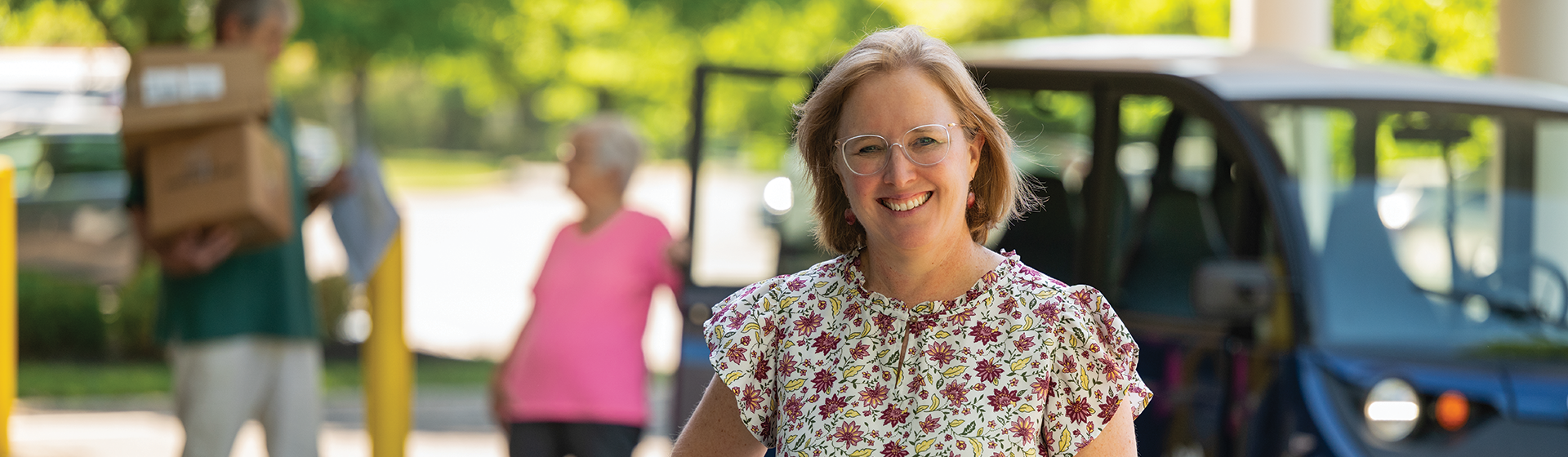
So in this season of purpose and retirement, we’re going to be talking with people whose stories appeared in the articles published in our fall 2026 Destination Gardens by Communities magazine. Today, we’re excited to host Duana Helsel, the volunteer and transportation manager for Frederick Living. Duana, welcome. Thank you. So I’m just I’m just kind of curious. What drew you to your role at Frederick?
Living after 18 years in. Was a children’s ministry, working in kids ministry. I got to work with a lot of volunteers, and I really love seeing volunteers that they’re not paid to be there. But when they find something that they love to do that they thrive there. So I was looking for to be a volunteer coordinator, and when I saw the position of Frederick living, and then when I read online before my interview about the mission and purpose of Garden spot communities, I was like, oh yeah, God, you could put me there.
That’d be great. With over 200 volunteers and team members. What does a typical day coordinating that many people actually look like? I get to talk to people all day long, which I think is great. It’s a lot of meeting with people. Showing them around campus. Taking care of paperwork, talking to team members to find out where they need volunteers.
Do you find that most of your volunteers are residents, or do you have people from the community coming in to volunteer as well? We do have a community members that come and help out, but the majority are residents. So again, I’m curious, like what? What’s involved in welcoming a new volunteer, whether it’s a person or maybe one of the therapy dogs?
Once they fill out the paperwork, then I’ll walk them around campus, explain to them who we are or what we do, get to know them a little bit. Find out what they’re passionate about. And then can I show them a calendar of what we have going on? Find the best place to plug them in, and then hopefully the the therapy dogs will come visit me as a regular step.
How many therapy dogs do you have? Probably about a half dozen. 2 or 3 that are there on a regular schedule and others that just pop by when they want to? The other part of your job is managing the Frederick Living fleet of vehicles. What’s the biggest challenge in keeping everything running smoothly? Vehicles don’t get any younger, so as they age, they start to fall apart a little bit and rattle and, you know, things need to be fixed.
But I have a great team of drivers that help me keep track of things and fix things. And I do a great job taking care of residents, and they make me laugh, too. So if I understand correctly, you grew up in Africa, right? And you’ve been doing mission trips to Africa with Frederick Living and Gardens spot. So I’m just sort of curious, like, what’s it like returning to Africa now after having grown up there as a kid?
My husband and I were able to go back to visit my parents in southern Africa. Soon after we were married and then again when our girls were little. So I’d already experienced going back as an adult, and it was very different to go back as a tourist with American dollars and and also to see things as an adult that I didn’t see as a kid as far as like security and, you know, guards and that kind of thing that as a kid you don’t think anything about.
But as an adult with little children, you’re like, oh, this is a little disconcerting. I hadn’t experienced slums like I experienced when we went on our trip to Nairobi, so that was new for me. Like, the African culture felt familiar to me and the rhythm of things, but to be in the valley and experience that was radically different for me.
Yeah. How did working alongside missions of Hope International in Nairobi and that trip that you took with gardens back communities? How did that shape the way you viewed your work? At Frederick Living, I now have pictures above my desk of my time there. So as people stopped by, I can. When I talk to everybody all the time, I can talk about Kenya comes up often, and I’m just grateful to be a part of a community that we’re that’s important, that when we can come alongside mission of Hope international and support what they’re doing there.
So one of the things that that I appreciate about Moki is that they put relationships in before doing things right. So it’s very relationship oriented. And so how does that when you consider what you do at Frederick with your volunteers, how does that sort of influence the way that you then, you know, get to know or interact with the volunteers as you’re offering them opportunities?
Like I said, volunteering is not paid to be there. So you need to be in relationship so that people feel comfortable telling you. Hey, this isn’t working. Or, I’d rather be doing something else. Same with team members to like, this isn’t a good fit for us with this volunteer, maybe. So to have that sort of relationship where people can come and talk to you and you’re checking in on volunteers and saying, how’s it going?
You know, you’ve been doing this for a while, and and people change too, with a different chapter, like, okay, I’ve done this for a long time. I’d like to do something different. Growing up, as far as the land now is, seems to have shaped your view of service from an early age. What do you remember most from that experience?
I was in England for middle school and high school, and I had the privilege of going to international high school. So to be surrounded by people from 40 different countries and none of us look the same or talk the same or, had the same story. And so to have that sort of background of people are different and it doesn’t matter what you look like, and we need each other and we can learn from each other.
I think that is definitely shaped how I look at people and what I want from the people around me. What keeps pulling you back onto a plane to keep going? Different places. Well, first you have to let the memory of the last plane ride fade a bit before you get another one. My husband and I both really enjoy traveling and to go someplace new.
See new buildings. See, I do like birds. I’m at that stage in life. So to go someplace and see the birds and, experience new foods and just walk around and explore a city we’ve never been in. So Paul and I are always talking about what’s on our our short list and our long list, and where are we going next year in five years and ten years from now.
So where are you going next? California in January and then back to Kenya in March. So speaking of March. What are you looking forward to most as you co-lead the travel with purpose trip to Kenya? I am most looking forward to seeing our sponsored twins favor and favored. Oh, we didn’t get to meet them until the end of our trip last time, so to be able to see them again.
Hopefully they’ll know a little more English than ice cream so it can communicate with them a little more and looking forward to seeing them, and hopefully to reconnect with the other girls that I got to hang out with to last time. And I’m also looking forward to seeing how God works in the hearts of the team that goes there.
What are your responsibilities as the co-leader coming alongside Brandon? Whatever needs done. Trying to help out a little bit more with the the numbers side of things. And things organize, somewhat more of the background details sort of thing. Is there anything else that you would like to say to our listeners, either about volunteering or about, you know, their thoughts about world travel with volunteering?
Like, don’t feel like you have to commit to something and stick to it. Like, just try things out, explore, see what’s a good fit for you and Kenya wise. Don’t let that 14 hour flight scary away. Like we take it easy. We take it slow. The pace of the whole trip. Like it’s very relational, but I would hope no one would say no just because of that plane trip.
I mean, it is a big commitment, but come along and see what that can do. Well, thank you for being with us today. Thank you. I enjoyed it. If you would like to read the article about Duana that appeared in the fall 2026 issue of Destination magazine, click on the link in the show notes. Thank you for listening to Purpose and Retirement.
Our host is Scott Miller and our co-host is Juanita Fox. Our audio engineer and producer is Austin Gingerich.