

But life isn’t always about you. I had three children who needed to know that God had a purpose for them, so I really lived my life making sure they were okay, that they knew that their lives had a purpose, and that there was a reason for them to be here. Hello, I’m Scott Miller, the chief marketing officer at Garden Spot Communities, and I’m Juanita Fox, the storyteller.
So in this season of Purpose in Retirement, we’re going to be talking with people whose stories appear in the articles published in the fall 2026 Destination Garden Spot Communities magazine. Today, we’re excited to host siblings Sue Fitzgerald and Tom Payne. They are residents of Garden Spot Village, and they chose to do the Wisdom Course together, an experience that led Tom to become a facilitator.
Sue and Tom Walcome. Sue, when we spoke earlier, you talked about the fact that even though you grew up with the same parents in the same house, it felt like you had two completely different experiences growing up. What do you think contributed to that? I think it was a time period where women were still considered subservient to men.
And my mother particularly raised me as my father was the head of the household. And you needed to obey whatever he asked you to do. So we had different expectations. So as you think about this just a little bit, when you realize that, you know, the two of you were going to end up at Garden Spot together, like, what did you think about that?
Like, how did that land with you? You know, we hadn’t been close for a long time because life takes you in different directions. But I always felt like between my other brother and Tom that Tom and I were more alike. So I’d say it’s been a good experience. I’m glad that he’s here, and I’m glad we can reconnect.
I remember when we went to London, it was our first time kind of back together. Like Sue said after a long time and we had a great time. We giggled and laughed and just got along really well. Well you both, you decided to take the wisdom course together. So, like, why did you decide to do that? I don’t know that it was a decision.
I wanted to take the wisdom class because I really wanted to continue to learn. I don’t want to feel that just because I’m getting older. I have nothing more to learn. Because every day I learn something. And then Tom joined. Honestly, I thought it’d be fun. I didn’t know really what to expect. And Sue mentioned it to me, and I said, why not?
It sounds like fun. And it was so, Tom, you had so much fun that you decided to become a facilitator. What made you step into that teaching role? One of the things I learned in the wisdom course was that I really enjoy teaching or facilitating. I went back to school to learn that kind of thing. I enjoy working with the older generation.
Scott, you and I talked at our last meeting. It was very rewarding to see the older folks chatting with each other and really getting involved. And I think that’s one thing that I really enjoy. And what I want to learn more about is learning more about that interaction and how people react and all, so that that’s what’s driving me to do that.
Sue, you spent your career as a reading specialist? And so, you know, what kept you motivated to ask what could I do to make this child successful? I don’t think learning is a one size fits all. I think we try to make them that way in public education and that’s a shame because so much of the time, politicians drive the way we’re supposed to teach and the brain is unique.
Every child is unique. And I think that you have to look beyond the curriculum and look at the child. That is so true. I saw that with my three daughters. They all learn differently. I have identical twins, and they’re not the same. Yeah. What are some techniques that you use to draw each child out to learn what their learning style is?
Some children are motivated by rewards. So you can use stickers or some kind of reward to drive them, cooking to drive them, whatever works to keep them reading and loving to read. Some children need more activity, and they need to be able to move around more. So I think that every child just has a different need, somebody to learn by giving them experiences, taking their words, and writing them down, and then taking the vocabulary from their actual words.
Some learn from a prescribed plan, and you have to be open to different modalities. I taught regular ed. I was a person who would go around and help evaluate children who needed extra help. And then I became a reading specialist, which is where I think I was meant to be all along, because it gave me a chance to really look at the child.
I also worked for the Pennsylvania Writing Project. I was the site coordinator of several of their sites, including West Chester University. And I really believe in that approach where you have teachers teaching teachers, and you have children coming, and you take their experiences with literature, and you add writing to it, and it’s just all interconnected. So that was valuable.
My career also. Tom, you said that the Navy was one of the best decisions of your life. What did that experience teach you that stuck with you ever since? Well, I joined when I was 17, so I was quite young. I went to boot camp and got drafted while I was in boot camp. So I think that’s kind of a funny thing.
But the one thing I learned in the Navy is they gave you a job. It may not be what you think you wanted. It may not be in your line of thought. They told me I was going to be a gunner’s mate. Okay? I don’t like guns, but I said for four years I can do it.
I became very good at it. I went to all the classes, learned how to do it. So I think that’s kind of what I learned–to stick with it. Do the best you can. Even though it may not be what you want to do at the time. But that kind of stuck with me and I just did my best.
And you chose the Navy before you were drafted. Why did you choose the Navy? Well, I was a really bad student. I knew I wasn’t going to get into college. It was during the Vietnam War when they were drafting, and I figured, well, I’m not going to college, I’m going to get drafted. So I’m going to make a decision for myself. And honestly, I wanted clean sheets.
The Navy gives you clean sheets every night. I didn’t have to sleep in a foxhole. You know what? I’ve. The things that you just said was like, you just. I can do anything for four years. You just sort of have to go with it. You know what we say. You’ve both heard this over and over in the wisdom courses, like trust the process, right?
And it all works out. It reminded me the same thing. Just trust the process. Right. And things work out. Yeah, yeah. It worked. I mean, I learned how to fix big guns. So if you have a three-inch gun in your front yard, I can fix it. So how did that affect your career path? Once you came back from your service, where did you go next?
Well, the first thing I did is I was accepted to West Chester University for one course so I could get out of the service a couple weeks early. And then I found that I like school. So I ended up going to Montgomery County and worked my way up on Temple University and beyond. But again, I think, Scott, like you said, just trust it.
I kind of went with it, had a lot of opportunities. I ended up being a purchasing manager. And unfortunately, with that job you tend to get laid off a lot, but it made it easy for me to go to another job. I’ll do the best I can and just go with it from there. Finally it 64, when I got laid off, I did say I’m done with business, so I went into the Chester County Intermediate Unit, and that’s where I taught at risk students job skills.
Absolutely loved it. So here I am. You know, Sue, you said that you really can’t understand a place until you’ve actually experienced it firsthand. So I’m just curious, what’s a trip that you took that really helped you see the world differently? You know, it’s a funny thing, having been widowed so young, I never thought I’d have the resources to be able to travel.
So having had girlfriends that said, Sue, let’s go. Here we go, okay. And I was able to do it. So I think that experience of visiting other cultures and seeing how other people live their lives makes you realize how close-minded you can be when you stay in one area and you never move beyond that. And that’s sad.
So I think it’s good to keep your mind open to what’s out there in the world. Africa, definitely. I’ve been there twice now. The people in Africa, if you go there, they will touch your heart in a way that no one else does. I’ve also read hundreds of books on World War II. But to be in Poland and walk into Auschwitz is, just an amazing experience.
So every experience opens your mind to something new, and you just can’t believe that you can read it in a book. But go there and it’s real. It’s authentic. You know, you make me think of the time I went to Israel. I read the Bible all my life, right? But it wasn’t until I actually visited Jerusalem and Israel that it just it changes everything.
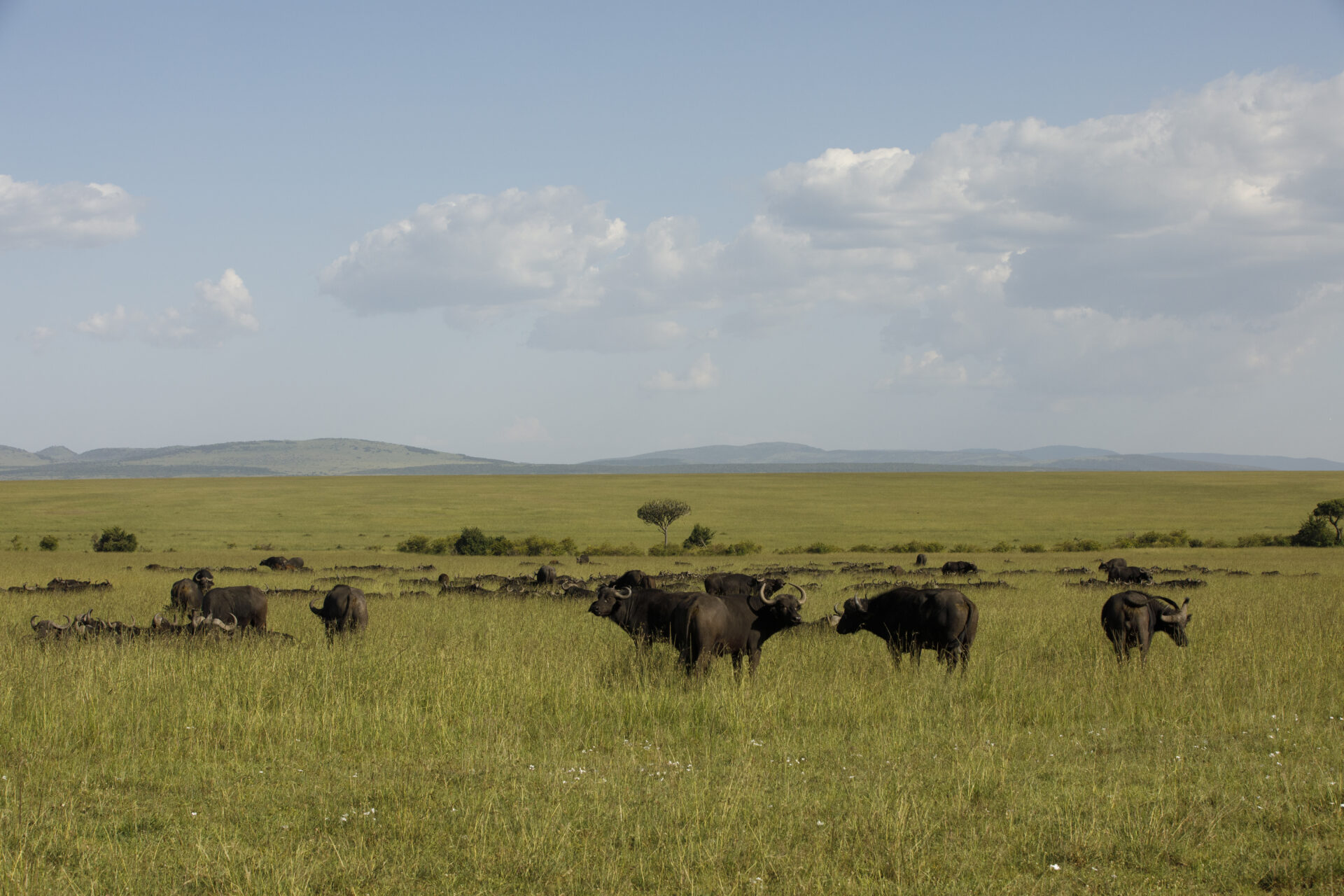
Like you said. Yeah. It’s real. And so the two of you traveled together, and one of your most recent trips was to Kenya with the Travel with Purpose Trip with Garden Spot Communities. What was it like to travel to Kenya together, and was there a change in your relationship after that experience? I have to tell you, having been with my brother, it was wonderful for me to see how the experience impacted him.
I could see how it touched his heart, and I just think that it was such a wonderful experience for him and for me to be able to be there and see that in him. I was just very grateful. I struggled the very first day we got there. Part of it, I think, was we traveled 16 hours on a plane and then immediately went to a garden party, so we didn’t get into very, very late.
And then I ended up sleeping by myself in the hotel when the whole crew was in another building. So I felt very lonely. And I mentioned it to Sue, and she mentioned it to a couple other folks, and they said, Tom, as long as God’s with you. You’re not alone. But I was struggling, and I said, do I go to church the next day or not?
And with Sue’s guidance, I went to church and it was two-hour ride. I think it was over bumpy road. Oh, God. Awful dirt roads. I mean, it’s a really. I met this wonderful little boy. I guess he’s 3 or 4, wandering around our group, and he ended up sitting on my lap.
And Sue took a great picture of him. His name was Wonderful. And he totally, totally changed my mind right there. And I had a great time the rest of the time. You know, Sue, when we looked at a whole variety of different things during the wisdom course, you know, at some of those things that that we looked at could be a little bit on the difficult side and, you know, like you faced enormous losses when you were like 44, I think, like your father, your brother, a husband all within like six months.
And what I’m curious about is how that shaped the wisdom that you share with others today? Well, first of all, you never stop planning in your life when you’re young. This is going to happen, and that’s going to happen. And then God comes along and says, I don’t think so. And it happens totally different than what you anticipate or expect.
But life isn’t always about you. I had three children who needed to know that God had a purpose for them, so I really lived my life making sure they were okay, that they knew that their lives had a purpose, and that there was a reason for them to be here. So hopefully they may take that, that they know that they’re here for a reason.
They’ve all been successful. If you look at monetary success. But I hope that they’re good people, because at the end of the day, that’s what matters. So it shaped me in that I continued learning. I have a Master’s plus 60 credits beyond a Master’s and discovered that I really like to learn and traveling.
Having always been a homebody, I didn’t expect to be a traveler, and I’ve discovered that I love it. If my husband were here, would I do that? Probably not. Everything is coming together in our lives and led us to this point. Like you just can’t plan this, right? You just can’t plan it.
And that was a disappointment. I thought I was in control. So, Tom, you and your wife moved to Garden Spot just a couple of months ago. What has that move been like? And how would you describe the acceptance you’ve experienced? First of all, the acceptance has just been beyond any expectations. Everybody has been wonderful.
We both signed up about the same time. Sue got in a year and a half or so after being on the Radar. And we were four years, so we were coming up here frequently. Anyway, but to go into the Harvest Table when we were eating and one of the ladies just goes, hello.
I mean, that makes you feel great, you know, and even in our little cul de sac, everybody’s been wonderful. I don’t think I’ve ever really had that experience anywhere else. You know, one of the things that you said was that it took about four years before you were able to actually to move to Garden Spot, which is not untypical.
Right? A lot of people want to move in. And so I’m just curious, like, what advice do you have for people who are on the radar screen or who are not on the radar screen? Who, you know, they’ve got a little bit of a wait ahead of them. Step back and breathe and come up as much as you can and just enjoy the environment and you’ll get in there.
Is there anything else that you’d like to share with our listeners before we close for today? I would like more people to try the wisdom course. I think there’s a lot there. I’m learning more now, Scott, than I did the first time around, and I’m guessing that’s not atypical, but I, I really am enjoying it. So it hit me hard the second half of that meeting that we had and I think I’m really going to enjoy it.
If you would like to read the article about Sue and Tom that appeared in the fall 2026 issue of Destination magazine, click on the link in the show notes. Thank you for listening to Purpose in Retirement. Our host is Scott Miller. Our co-host is Juanita Fox. Our audio engineer and producer is Austin Gingerich.